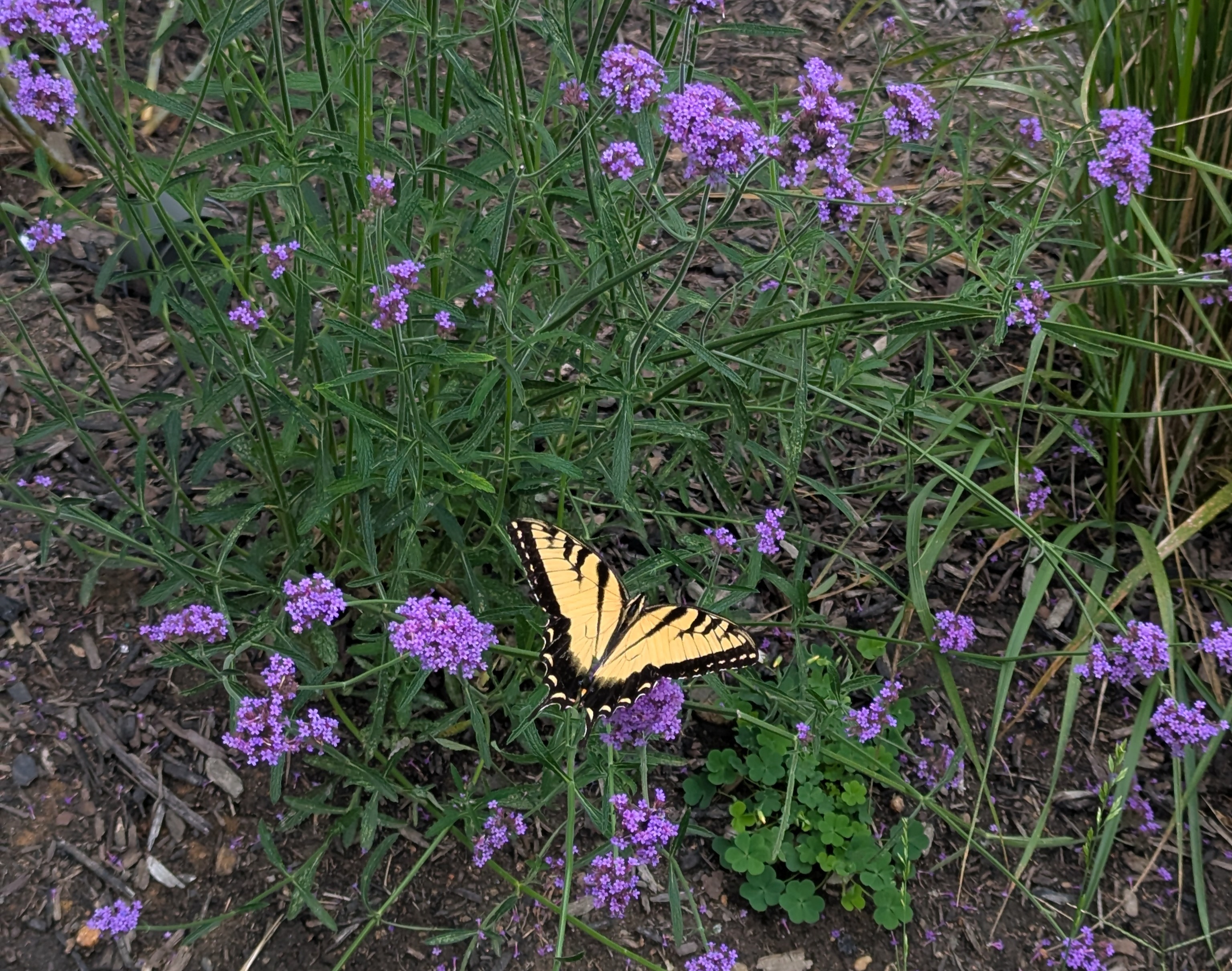
The next in my “Longwood Gardens” series– over 1,100 acres of gardens of all shapes and sizes in Kennett Square, Pennsylvania.
My last post featured their 86-acre Meadow Garden consisting of wetlands, ponds, open fields, and a forest’s edge during the fall-time. This post is about The Meadow during the summer from my most recent visit on July 25.
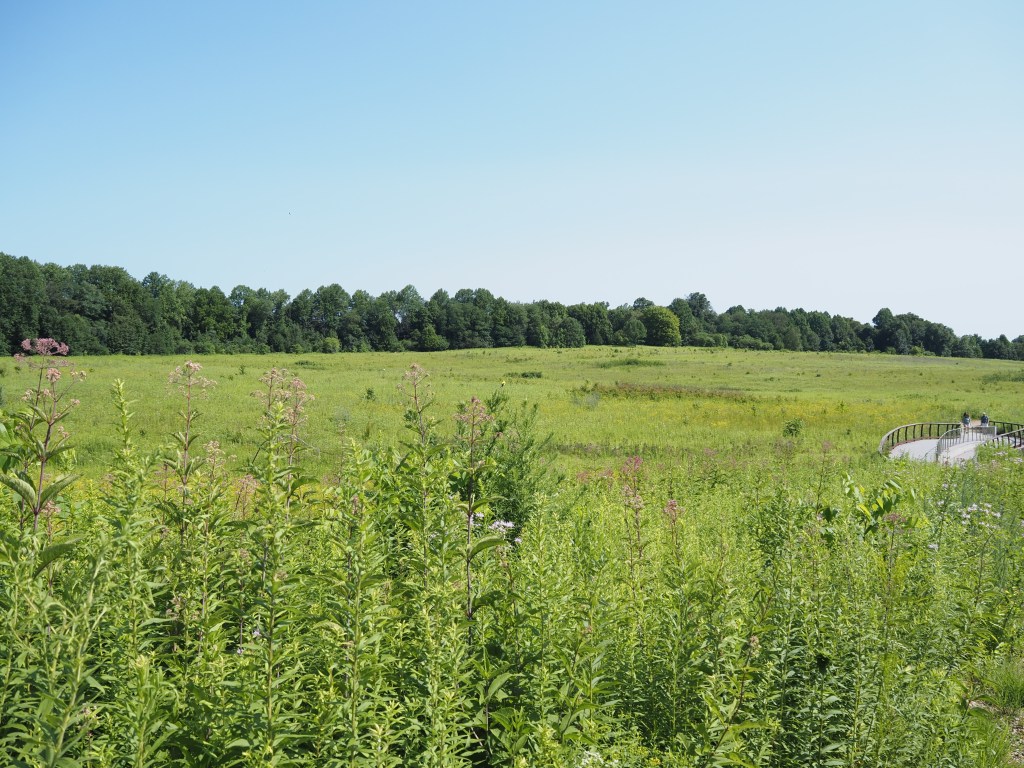
An American Goldfinch (Spinus tristis) looks out upon his domain, near the main starting point of the Meadow. This doesn’t even capture half of the Meadow, maybe not even a third or fourth. This time, the Joe-Pye weed (Eutrochium sp.) was in bloom, which are the tall plants with pink flowers that you see in the foreground.
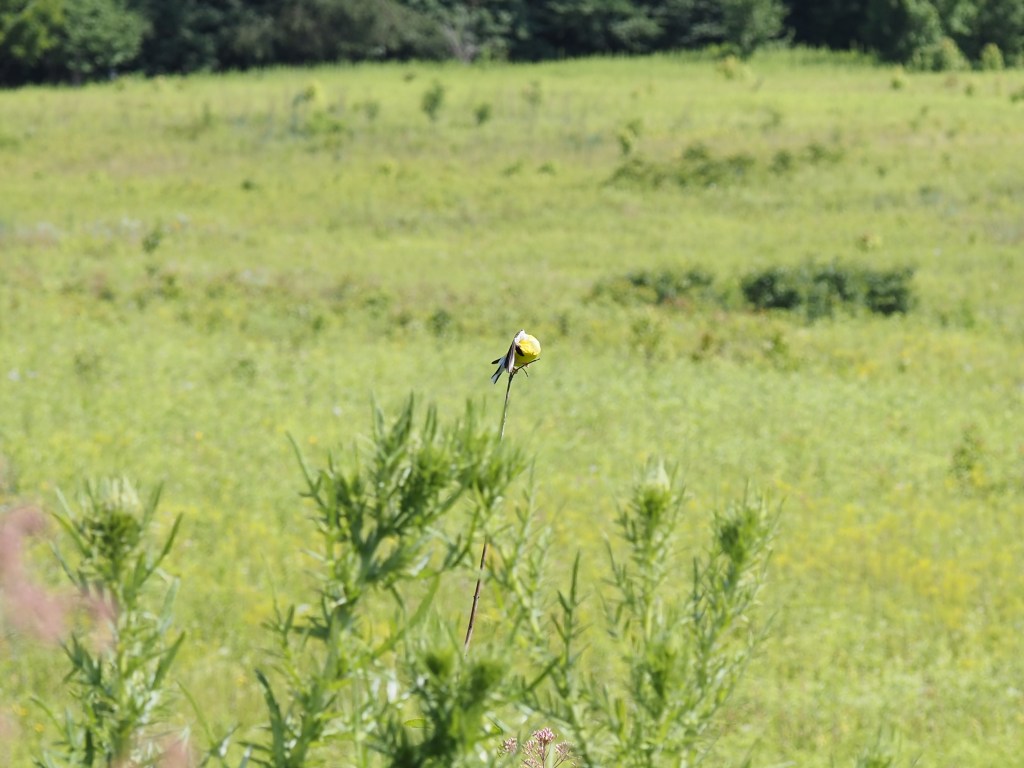
He’s perched atop a stalk of some plant, right behind a Cirsium species. I would guess, being here at the carefully monitored Meadow garden, that it’s most likely a North American native species like C. muticum (swamp thistle) or C. discolor (field thistle), but I can’t say for sure with my level of thistle identification skills (and especially from an out-of-focus long-distance photo). The perhaps more familiar bull thistle (C. vulgare) is not native to North America and spreads quite aggressively through rhizomes– officially listed as an invasive in some states. The Goldfinches do love its seeds, but they also love the seeds of our native field thistle and swamp thistle, which are much cuter anyways.
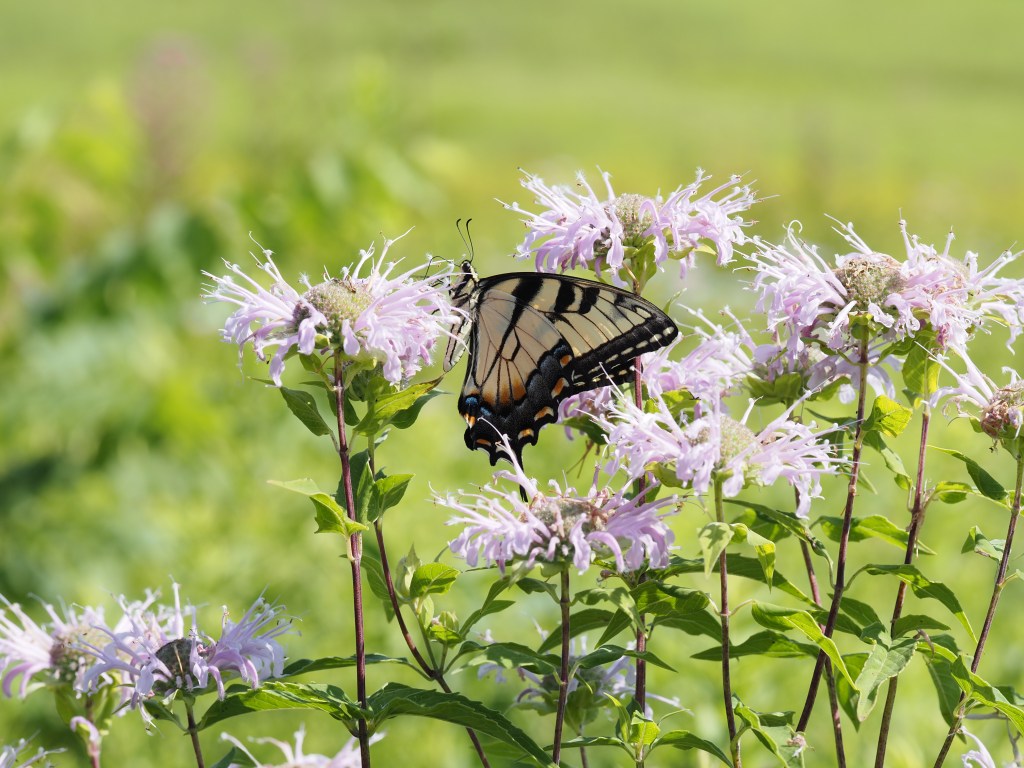
Also in bloom was the Monarda, aka bee balm. Most likely M. fistulosa. Swallowtails loved it.
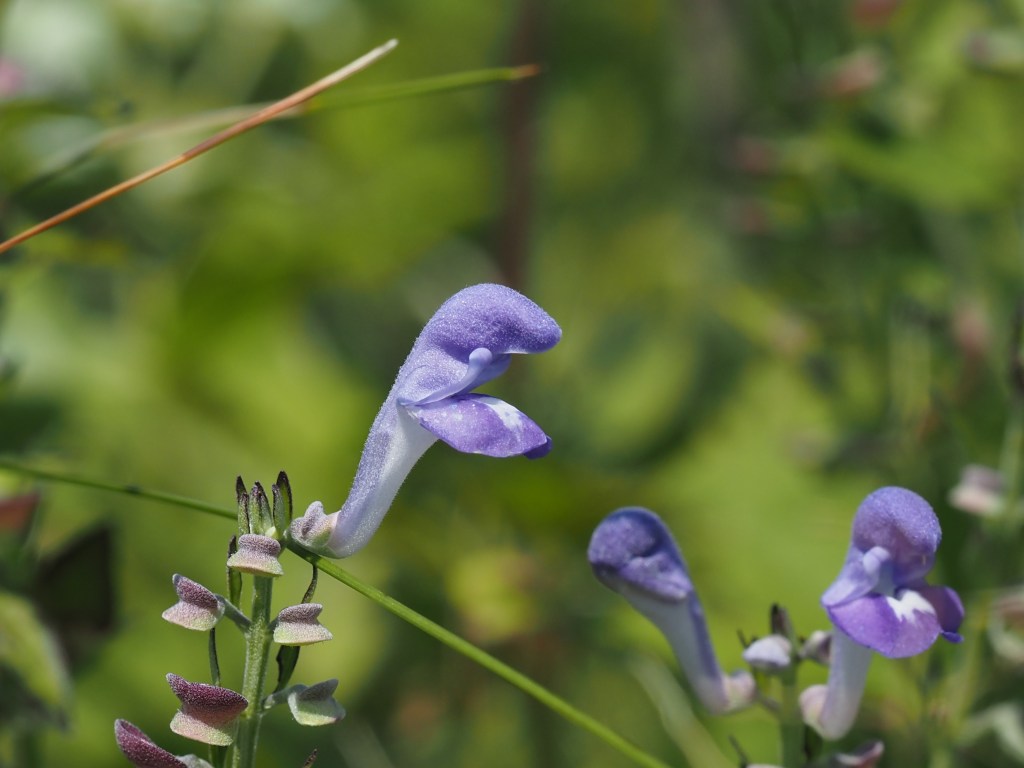
I got to see the skullcap (Scutellaria sp.) in bloom too, which I’ll admit is the first time I’ve actually seen its flowers in-person. They’re pretty fun looking and its leaves are neat too.
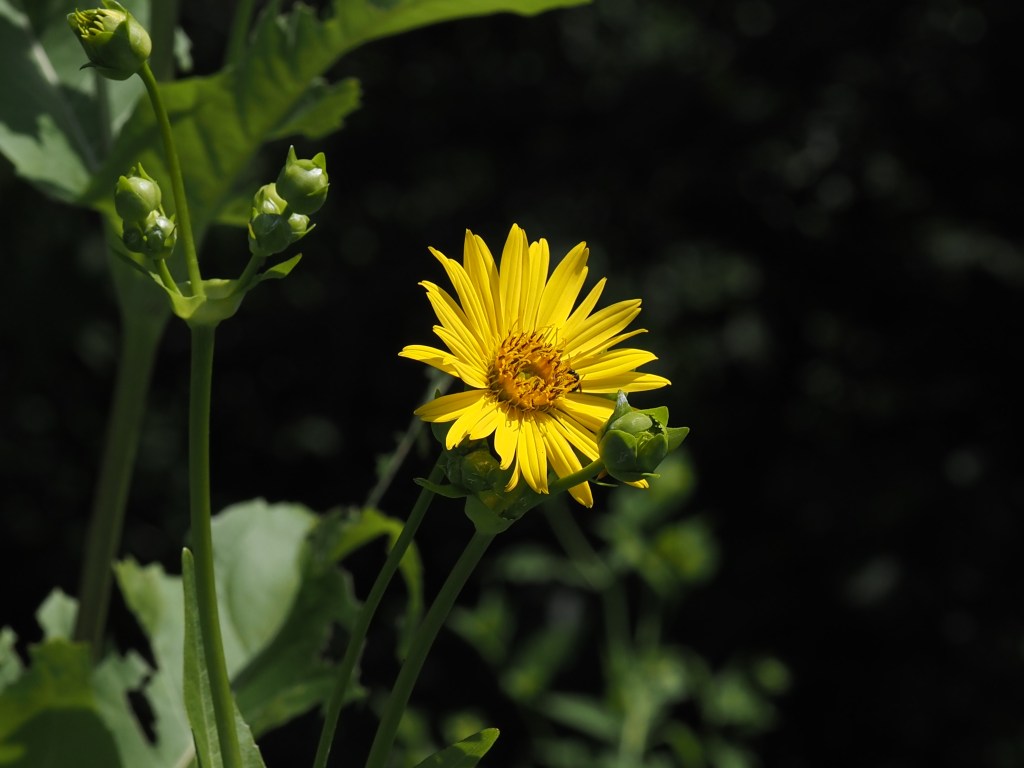
This is the mighty Cup Plant, Silphium perfoliatum– fairly easy to recognize by its leaves that clasp its stem, forming a “cup” that holds water. The cup plant can reach up to 10 ft tall and is highly valuable as a source of water, pollen, nectar, and seeds throughout the year.
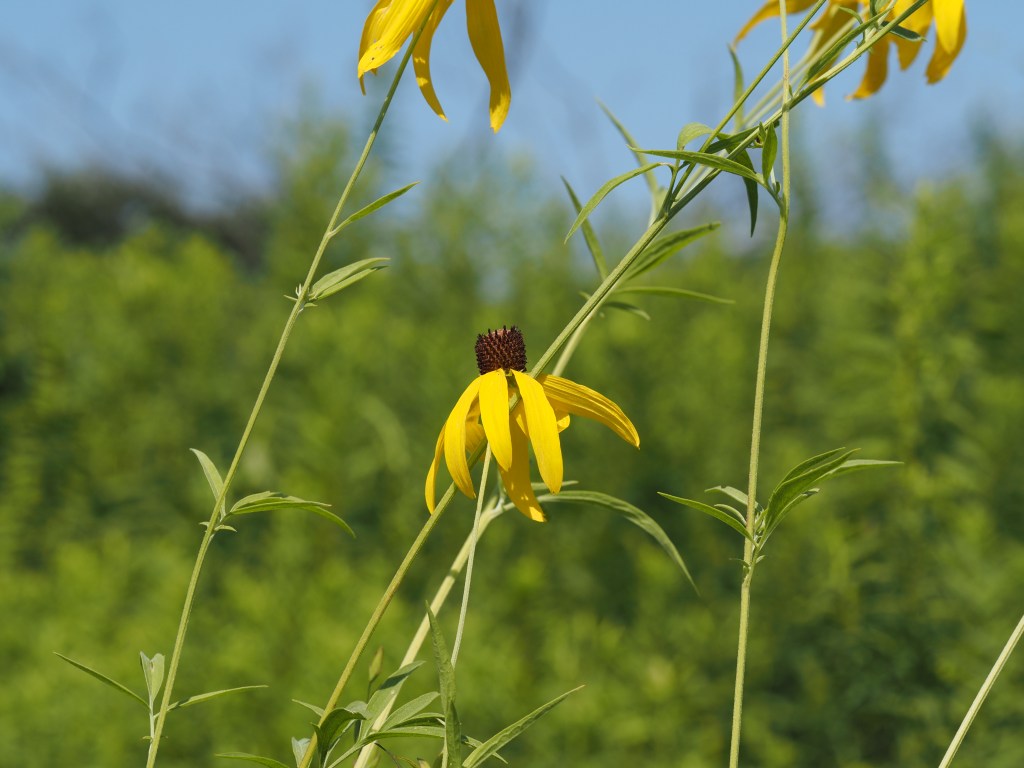
No, this isn’t a Black-eyed Susan. Here is what I believe is the Gray-headed Coneflower (Ratibida pinnata). In Pennsylvania, the gray-headed coneflower is listed as endangered and critically imperiled, although it is secure elsewhere. I didn’t see many of these throughout the Meadow and it really stood out.
One that I was very excited to see at the Meadow was Filipendula rubra: Queen of the Prairie. It grows 3-6 ft tall and blooms in pink, cotton candy-like plumes. I have a couple in my yard, but unfortunately the deer munched on them early in the season and they’re still quite small. They’re also fairly young plants, so maybe next year I’ll get some blooms (if they’re happy, which I’ve yet to figure out).
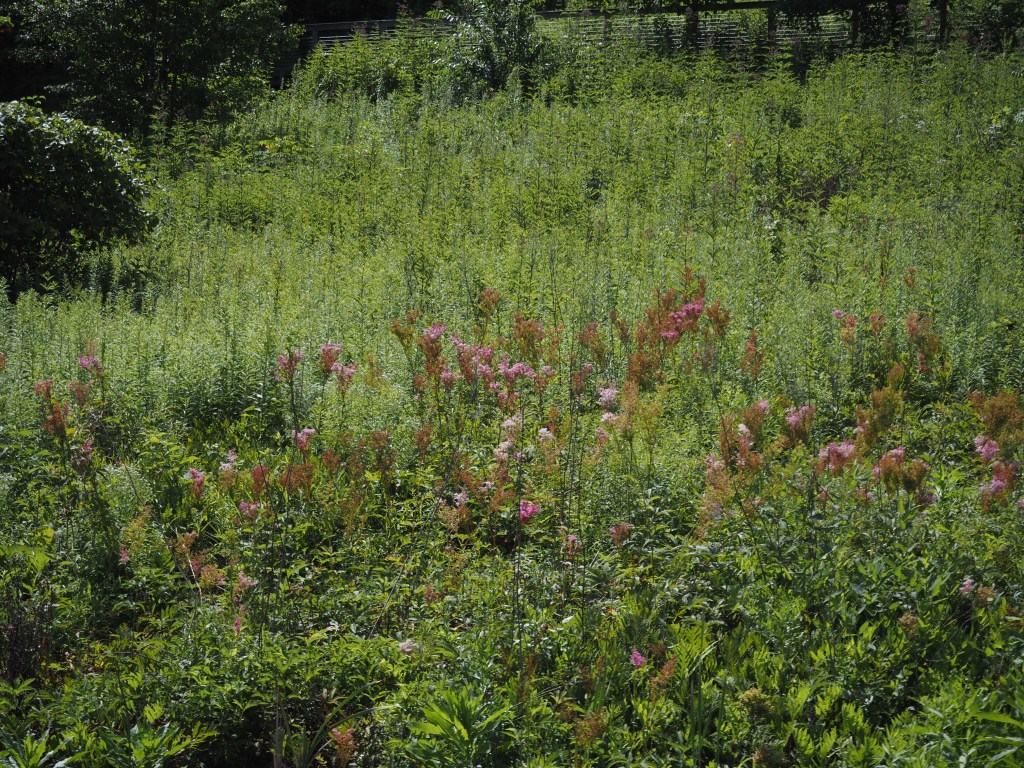
This was the only grouping that I saw in the Meadow and it was a ways off, off the trail. I was sad, but unsurprised really, to see it go unnoticed out there. In all of its native regions, it is either an obligate or facultative wetland species, meaning it’s either almost always found in wetlands, or usually occurs in wetlands but may appear in non-wetlands (2023, U.S. Army Corps of Engineers). Appropriately, this group of Queen of the Prairie was located on a downward slope towards a lower-lying area of the meadow that collected more water than other spots.
A while back when I looked more into the natural habitat of F. rubra, I learned about a very specialized, rare habitat: calcareous fens. According to the Minnesota Department of Natural Resources, calcareous fens “depend on a constant supply of upwelling groundwater rich in calcium and other minerals” (Minnesota DNR, n.d.). In states like Michigan and Missouri these are the preferred habitat of Queen of the Prairie (Michigan State University Extension, 2007; Aspinwall, N. & Christian, T. 1997). Knowing this information really made me appreciate Queen of the Prairie that much more.
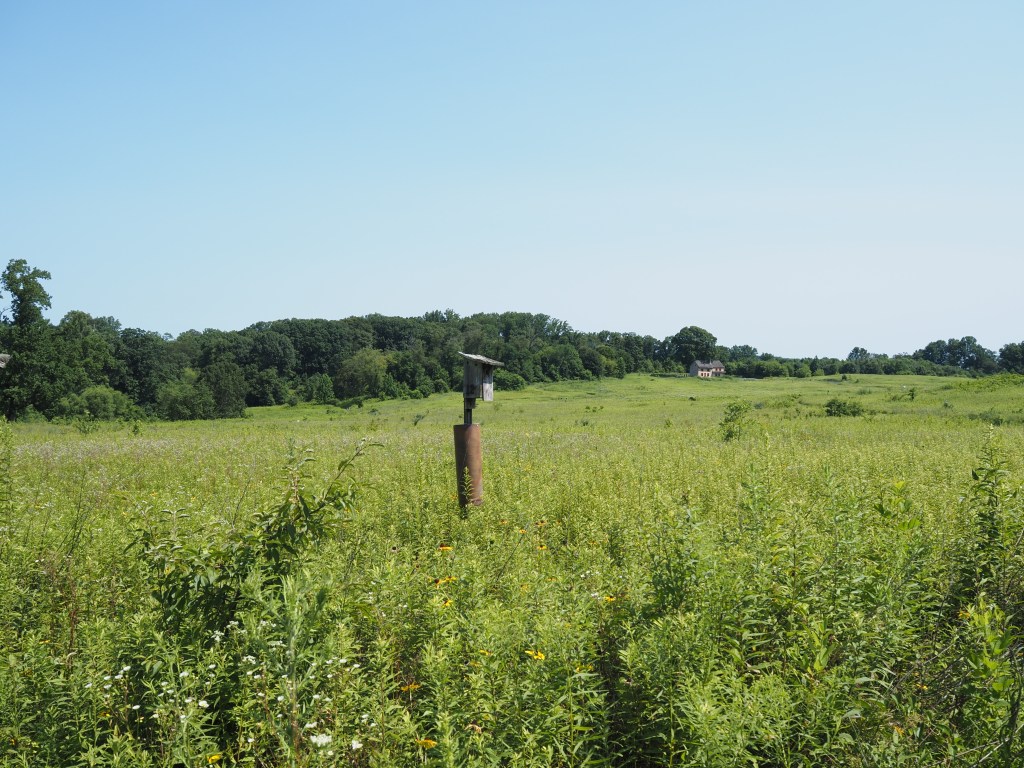
Here is a bird house situated in the Meadow, presumably aimed at Eastern Bluebirds, with the Webb Farmhouse off in the distance. There were many of these nest boxes scattered throughout the Meadow.
I took all of these photos with my “fancy new camera”, which is an OM System OM-D E-M10 Mark IV, using either the M.Zuiko Digital ED 60mm F2.8 Macro lens or the M.Zuiko Digital ED 14-42mm F3.5-5.6 EZ. I still really have no idea what I’m doing with this camera, but I sure do love it.


Leave a comment