So, I was born and raised in Iowa in a USDA zone 5a region. The crape myrtle’s (Lagerstroemia spp.) ideal range is 6a-9b (according to the NCSU Extension). I had never seen a crape myrtle until I moved away to San Antonio, Texas, at the tender, stupid age of 18. I actually rented a house back then and there were two medium-sized trees in the backyard on either side of the patio that had this really neat, mottled grey-white bark. I thought they were so pretty.
Imagine my SURPRISE and DELIGHT when these two trees bloomed PINK flowers in the summer. I didn’t know such a tree even existed — they were beautiful. I loved them so much. They were the best part about that old house that spewed up brown water from the master bathroom shower drain (rent was cheap and I was young, you bet I renewed that lease 3 or 4 times. I just stopped using that shower.).
I’m sure crape myrtles are all over San Antonio, but back then I was distracted with the difficulties only a young, naive, and mentally unwell 18-year-old girl could have. I didn’t know anything about trees and plants beyond that I loved them all and I knew they were important. Here where I live now in Maryland, zone 7b, crape myrtles are one of the county’s designated street trees and they’re also in many people’s yards. They’re everywhere, some pink, some red, white, purple. . . I should be sick and tired of seeing them. BUT I’M NOT. I still love crape myrtles. I can’t help it — they’ll always have a special place in my heart. Those bright, colorful beacons in a tough time of my life, that I would even climb up and onto the roof from sometimes.
I often see them “crape murdered”, where all of the branches are cut back to stubs. This is done because they flower on new wood, though I do wonder how many actually know why they’re pruning them and don’t just do it because everyone else does. . . Anyways, many “tree enthusiasts” and arborists dislike or even hate them because they’re so common and give little back to the native wildlife. I’ve seen ones though that have never been cut back and stand taller than two-story homes, with a satisfying pyramidal or vase-like shape. I wish I had photos of these to share, but since they’re in people’s yards that would be strange to take pictures of and then share. I assure you, though, they do exist.
I do have photos of a special crape myrtle cultivar from one of my favorite places. You know it: it’s Longwood Gardens! Eventually I’ll run out of photos from there, but not yet.
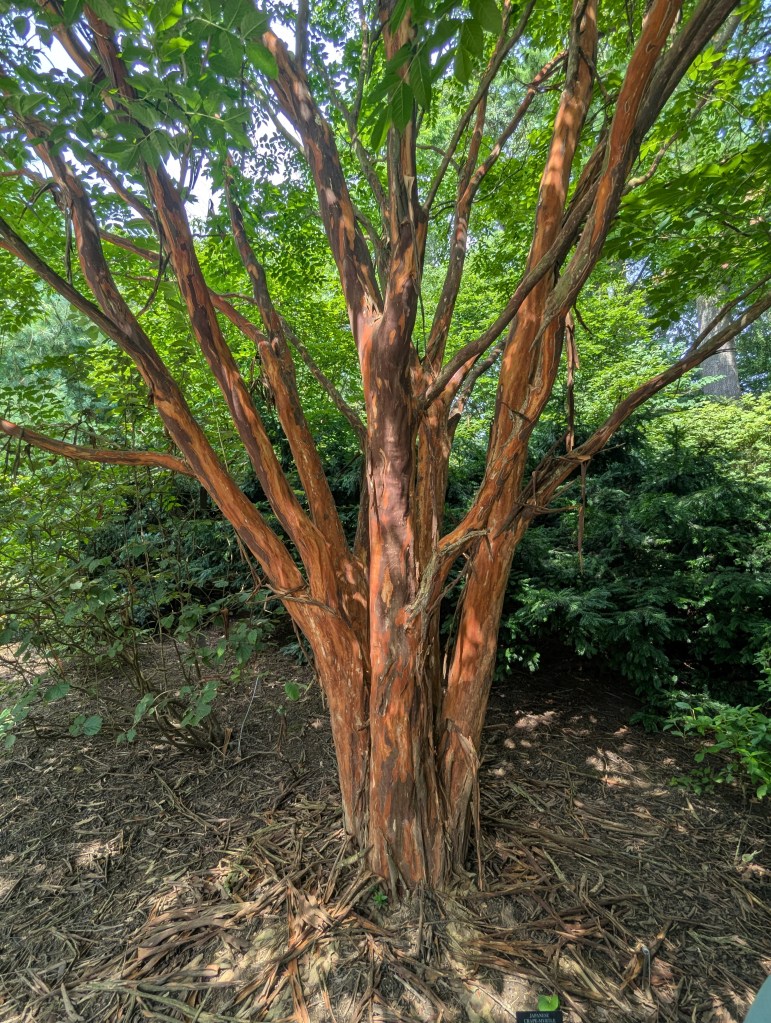
Its sign reads: Japanese Crape-Myrtle Lagerstroemia subcostata var. fauriei “Townhouse”.
Just. Look. At that. Bark. Now THAT is cinnamon-colored. And the way it peels. . . Its placement makes it difficult for me to get a good shot of its canopy, but you can see the vibrant green leaves there at the top. The contrast. I mean, can even you, a crape myrtle-hater, deny that it’s absolutely stunning?!?
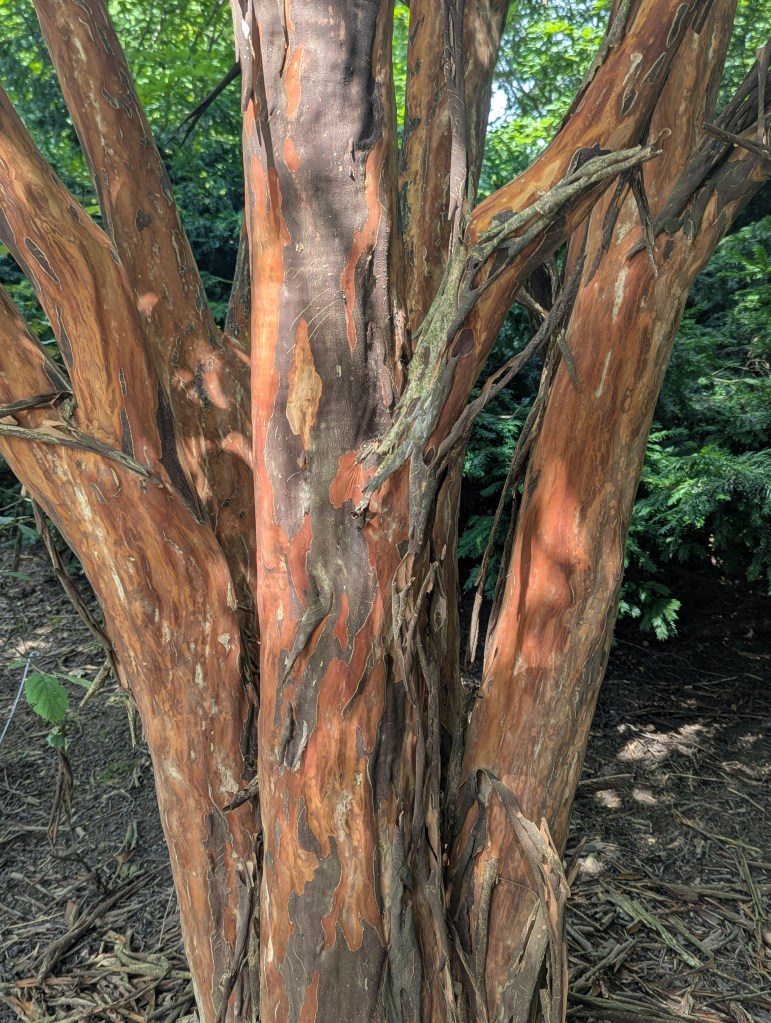
The two photos above were taken with my phone in August 2025. Looking through my photos taken this July, 2026, the tree is just as beautiful, but it does look like they did some editing of the surrounding plants:
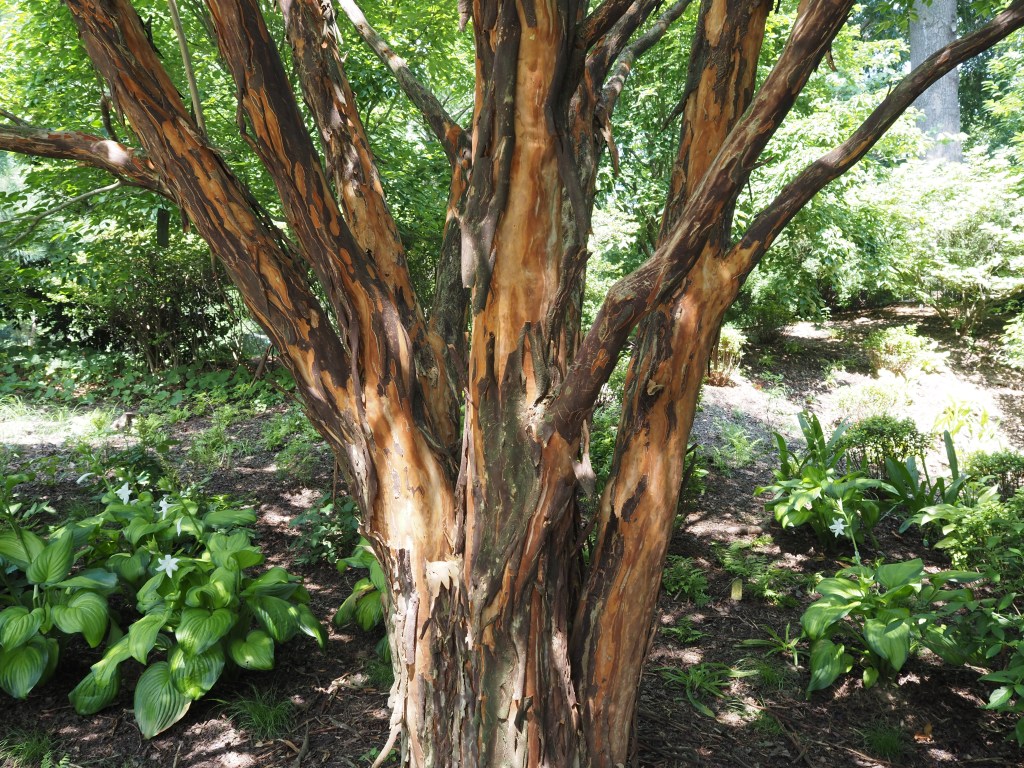
I mean, if you’re going to have a crape myrtle, you might as well go all basic suburban and put some hostas in too, right? At least the flowers are a little different than usual. heh.
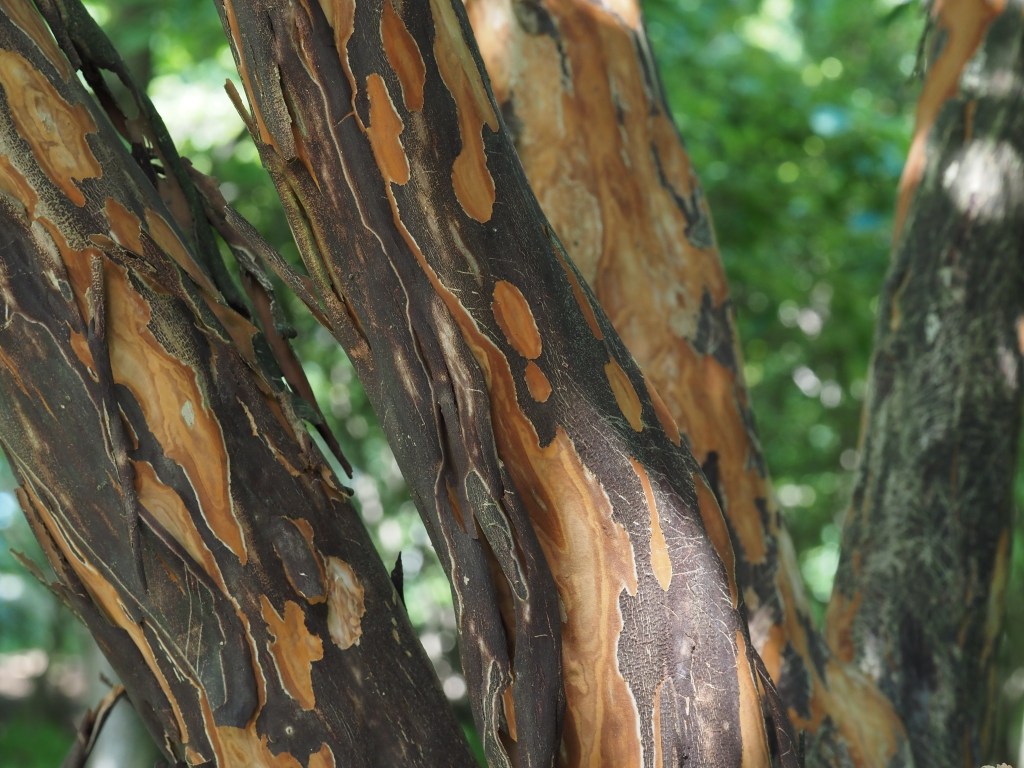
It’s just so good. I’ve never actually caught it while it’s blooming, but based on other images of “Townhouse”, it has white flowers. I wish they were pink. . . but then I guess the bark is the real star on this one.
I’ve looked around for the “Townhouse” cultivar and I recall finding only one nursery that actually carries it. I’ve planted 10 native trees and at least six native shrubs in my yard already, surely I’m allowed to treat myself with ONE crape myrtle. Plus, they’re relatively disease/pest resistant, especially when compared to all our precious native trees currently being wiped out. While I wish more cities had native trees on their street-tree list and more people planted them in their yards, in the end, I believe some trees is better than none. Though, I do hope on moving to a state much colder than here, so I might not ever have my own 😦
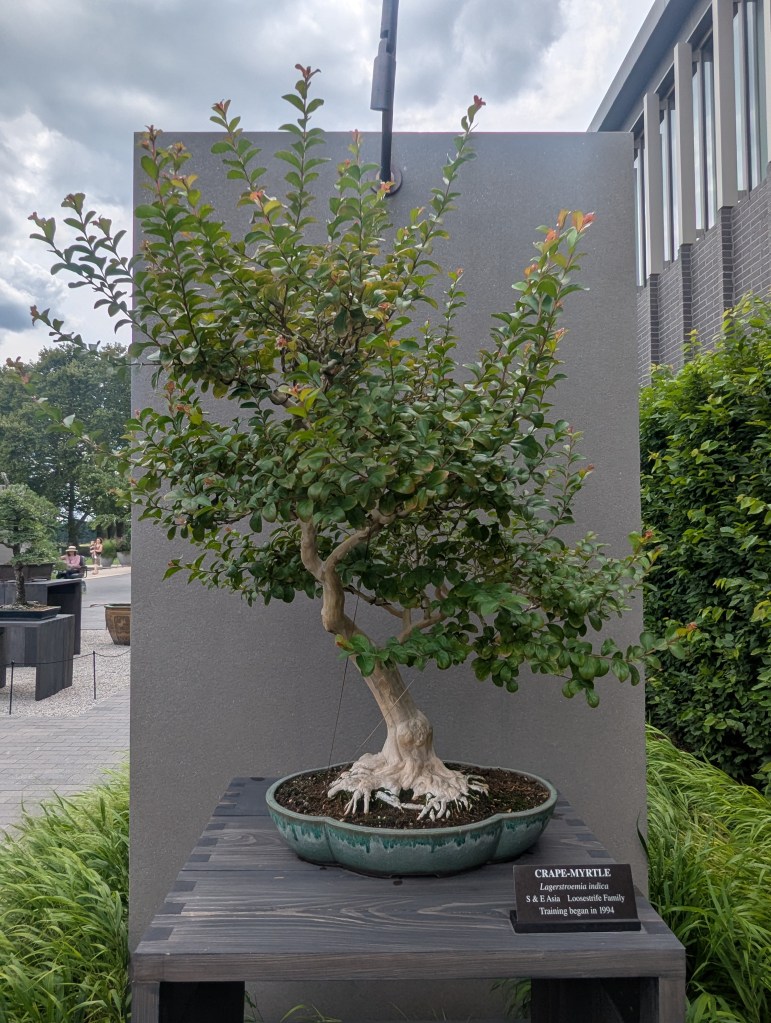
I’d also like to share this crape myrtle bonsai:
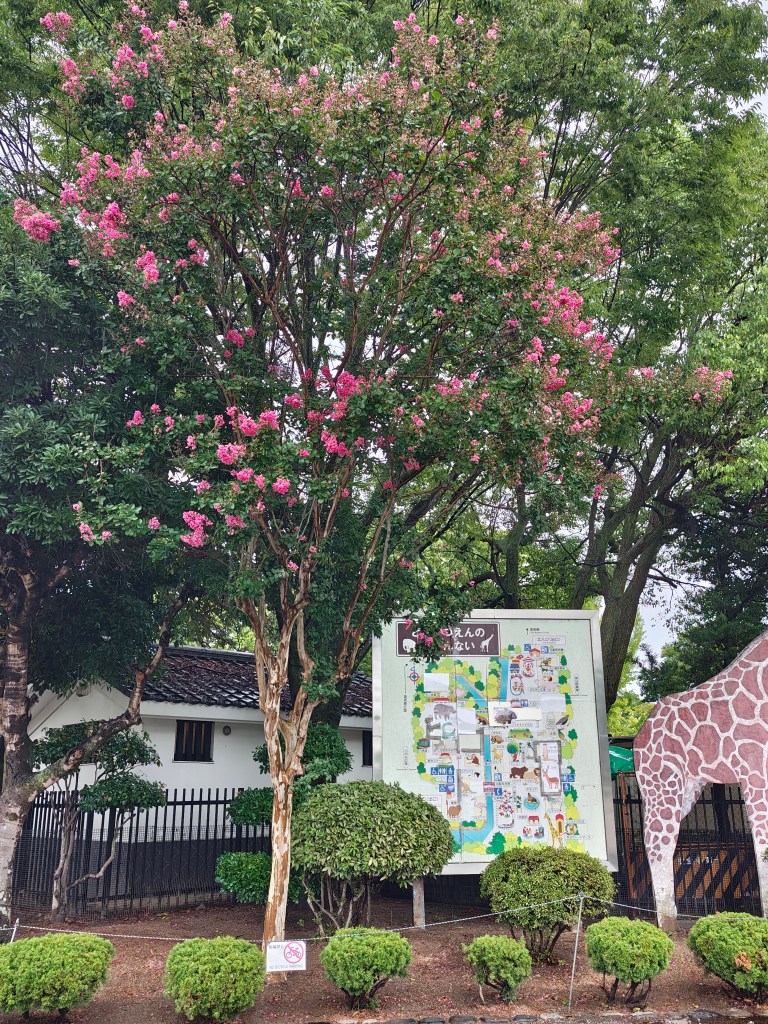
Below: I can’t say whether this is a L. indica (Common Crape Myrtle) or L. subcostata var. fauriei (Japanese Crape Myrtle), but let’s say it’s Japan’s native crape myrtle, albeit a pink-flowered cultivar (or hybrid). This photo was taken at the entrance to the Ueno Zoo during my trip to Japan this summer.
And, lastly, this (possibly) wild, white-flowered Japanese Crape Myrtle I took a photo of from a moving train in rural Japan:
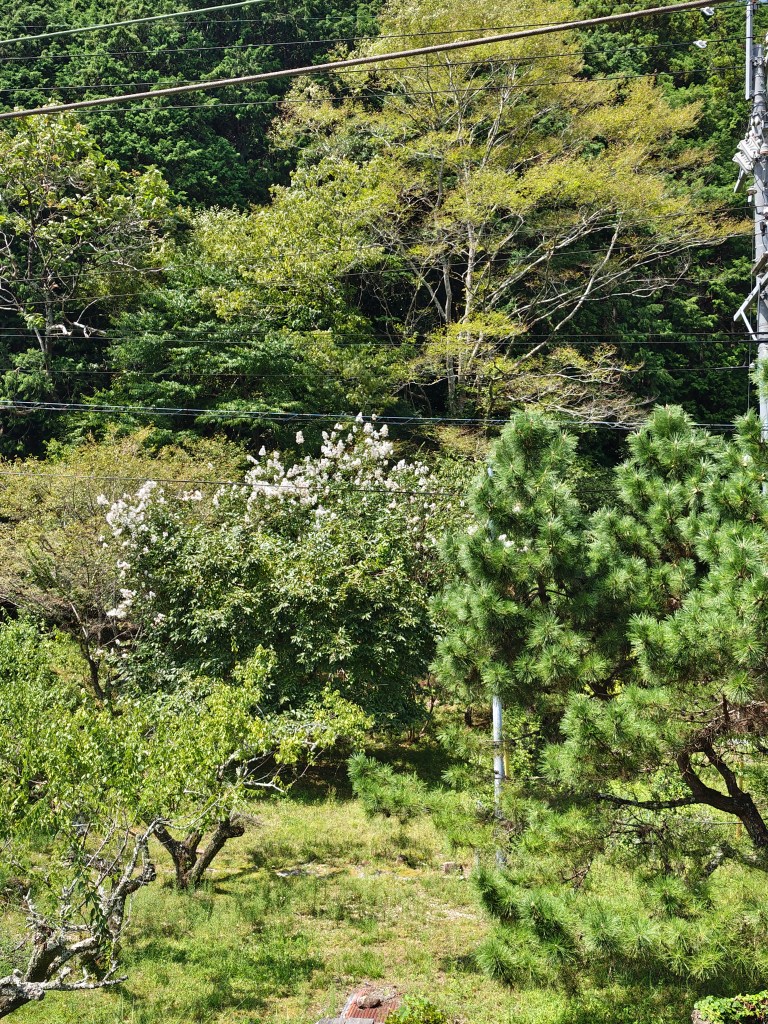
Ah, so pretty 🙂


Leave a Reply